
I have a huge love for antique and vintage sewing machines. There is just something special about them, especially the old treadle machines. I love the romantic feel of imagining a century of relatively quiet sewing, with countless sewists sitting for hours, working the treadle pedal back and forth while creating beautiful quilts, clothing, and household items for their families.
Our great-grandparents were hardworking and incredibly creative people. My grandmother had a beautiful treadle machine in its original treadle cabinet, and she took wonderful care of it. I absolutely loved that machine. When she passed away, I was still too young for anyone to take my request for it seriously, so it was sold along with so many other family treasures. I've never completely gotten over that.
These days, I'm considerably older, but my love for treadle and hand-crank machines hasn't faded one bit. So when I discovered one for sale, I was excited. Oh boy... I probably should have kept looking!
I found a 1906 Singer 66 at a Habitat for Humanity store, and it was in rough shape. And when I say rough, I mean really rough.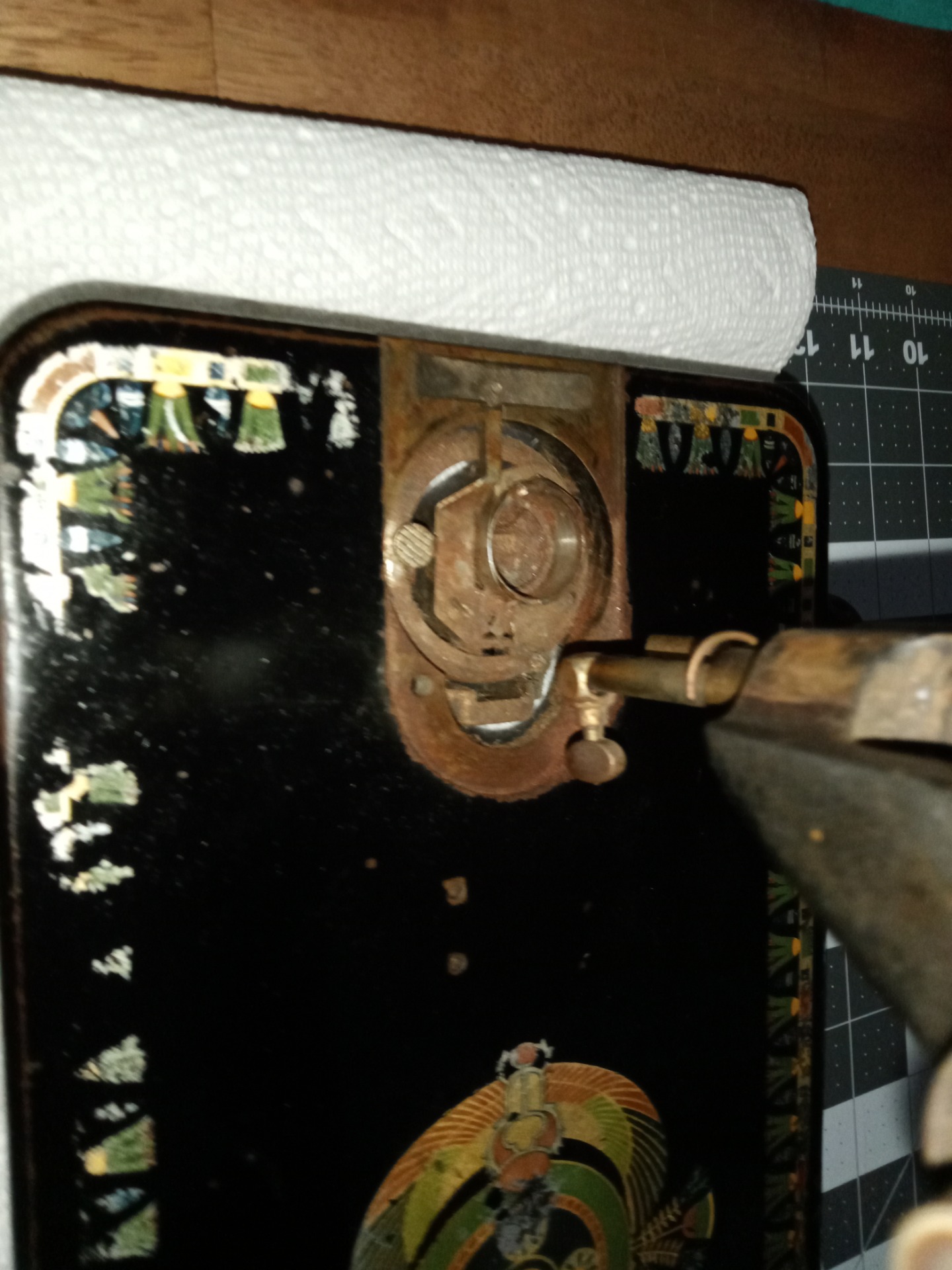
Just look at all that rust! The machine was completely frozen solid. Rust was everywhere, and nothing wanted to move. I applied some penetrating solution and waited... and waited... and waited some more. After many months, it finally started to move a little.
It then took another two years of patience and persistence to get the machine moving almost completely again. That's how badly rust had seized everything up.
You can even see the rust in the bobbin area. In fact, the bobbin hook is still stuck, so that's the next challenge. I'm continuing to work on it slowly and carefully, hoping to eventually free it from its century-old rust prison.
Restoring these old machines isn't always quick or easy, but bringing a piece of history back to life makes every bit of effort worthwhile.